


Your Destiny Is Calling, Will You Answer?
Let's DISCOVER Your
YOUR TRUE IDENTITY
Let me walk you through a step-by-step process so you can uncover what you're supposed to be doing, right now, so you can have clarity, and take your personal brand to the next level."
I CAN HELP YOU TURN YOUR 100% IDENTITY INTO REVENUE
What's Your Story?
↓
Are You Called To Make A Difference?
↓
What Is Your Talent And Gift?
↓
Passion and desire is not the problem, it’s a lack of knowing what to do, where to start and how not to waste valuable time and resources in the process. The challenge is that there’s a lot of noise happening, a lot of competition and it’s easy to get lost in the crowd.
WILL YOU LET ME HELP YOU.
74% OF PEOPLE
"ARE MORE LIKELY TO TRUST SOMEONE WITH AN ESTABLISHED PERSONAL BRAND."

Problem
Here Are Some Common Struggles - From Personal Brands:
I'm not clear on who I serve, I don't have a core message.
I don't know how to increase my sales
I don't know how to show up on social platforms
I don't know how to market myself
Serving Others
Find Someone's Uniqueness
What brings you joy?
What are you passionate about?
What problem do you solve?
What do you have expertise in?
What have you earned the right to talk about?
What business do you want to be in?
What would people be willing to buy from you?

Your Brand’s Identity
Is About Identity, And We Can Approach Building
A Brand In The Same Way We Approach Guiding A Client Through Their Own Identity Development.
Branding Offers A Way For Clients To Recognize And Perceive A Business. It’s The Image And Identity Of An Organization, And How That Organization Communicates Its Values, Beliefs, And Mission. When A Business Is Established, It Becomes Its Own Entity, And A Brand Is That Entity’s Voice In The World.
Much Like It Is For People, A Business’s Identity Develops From A Deep Understanding Of Who It Is, The Values It Holds, And How It Communicates Those Values And Characteristics To The World Around It. Through Its Brand, Clients Come To Recognize A Business And Know What It Stands For.
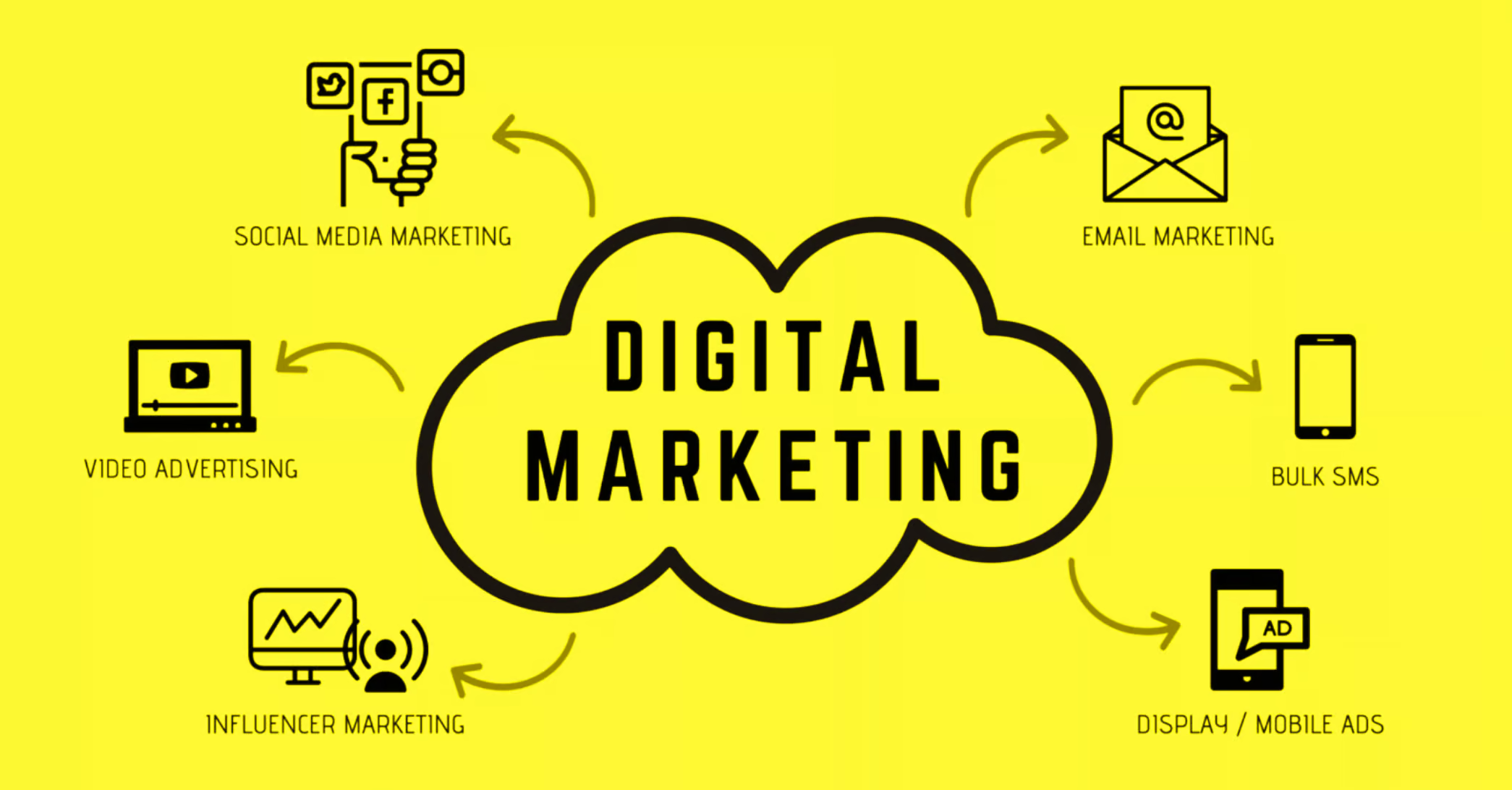
What is Digital Marketing?
Digital marketing is the promotion of a product, service, or brand through online platforms.
Social Media
Internet users typically spend more than two hours each day on social media accounts, which provides brands with ample opportunities to engage with their target audience online. This can be done through posts or paid ads, and is a great way to build brand recognition, especially if you’re targeting a niche audience.
Influencers
Like a recommendation from a trusted friend, people are more likely to buy a product that’s been recommended by an influencer they follow. Influencers help brands build both credibility and recognition, the two things needed to convent a lead into a customer
Video Marketing
Because of its rapidly increasing popularity, video marketing has become an invaluable tool for digital marketers looking to increase a brand’s recognition. A video doesn’t have to advertise a specific product to be successful. Simply by informing or entertaining potential customers with engaging content, you can increase awareness of your brand.
More Options to Reach Customers
Digital marketing channels allow you to target prospective customers with specific demographics and interests. So it’s particularly useful for selling niche products or services. With targeted ads, you can specify the demographics that match the profile of your target customers. For example, to draw customers who are interested in technology, you can see who is searching with keywords like “tech,” “computers,” or “mobile device.” Targeted ads allow you to then show these people your ads, which will hopefully result in higher quality leads.
Easier to Build a Community
With digital marketing technologies, you can reach more people through social media, which helps build a community around your product or service. Creating a community increases trust in your brand and builds customer loyalty. When you engage with your customers on social media channels and answer their questions, they develop trust in you, which means you can ultimately gain higher-quality, longer-term customers. As you build and nurture this community and actively demonstrate support for your customers, they’re more likely to recommend your product or service to other people. Types of Digital Marketing There are many different types of digital marketing tactics, and each has the potential to grow your brand. Let’s break down some of these specialties.
SEO
Search engine optimization (SEO) is a type of organic internet marketing. The goal of SEO is to boost your website’s ranking on search engine results pages so that prospective customers can easily find your site. Here are some common SEO strategies: Use keywords strategically and effectively in your online content. Use relevant images and graphics. Use appropriate descriptions for images.
Content Marketing
Creation of compelling, high-quality content that will appeal to your target audience. This can be done through blogs, websites, or social media channels. Content marketing helps the reader or viewer by providing information that doesn’t necessarily aim to sell the company’s product or service. This helps the consumer gain more trust in the company and also helps you widen your reach. Clothing retailer ModCloth, for example, practices content marketing by actively posting on its blog to engage with its audience and address style and fashion topics that potential customers are likely to care about.
Email Marketing
Email marketing is the practice of promoting your product or service through an email campaign. It can be mixed with content marketing, where valuable information is sent through an email newsletter—like a weekly digest—to subscribers. Retailers and businesses in the hospitality industry are among those that can benefit greatly from the use of email marketing, thanks to the ability to automate mailing campaigns and track results to see how well a campaign converted into sales. The practice can also be mixed with digital PR, where your business might reach out to content creators who can potentially feature your product in their own newsletter to share with their audience.
Affiliate Marketing
Affiliate Marketing is when a creator is compensated for promoting a brand’s product or service. Amazon is one of the most popular affiliate platforms. You can generate affiliate links for any product you like, and Amazon will give you a cut for leading the customer to buy it. Other companies give content creators private access to their affiliate programs. This means that only selected creators are allowed to be an affiliate of the company. This limits the number of people who can take advantage, but these selected creators are paid well for their quality audience.
Video Marketing
Video marketing is when a brand posts a video that provides useful information about its product or service. Videos can offer educational content, provide instructions for using a specific product, or help customers to troubleshoot a product. Many businesses create YouTube channels for the purpose of video marketing. These videos provide value to the consumer in the form of education or entertainment. Dollar Shave Club gained notoriety and a sizable following through the use of humor in its video marketing—its marketing messages are not only fun, but they also speak to every customer’s desire to have easy access to a product that’s both well made and affordable.
What To Ask Yourself When Building A Marketing Plan
#1. What want or need does your product or service fill? Every product or service fills a need or want in some way and helps to solve a problem. Understanding the pain points of your customers is key to building a good marketing plan because it tells you which benefits to highlight. #2. Who is your target market? Who are the people most likely to be interested in your products or services? How old and what gender are they? Where do they live? What kind of lives do they typically lead? Do they rent or own their home? What do they like to do for fun? Where do they spend their time online? Knowing these things is vital to a strong marketing plan. This is especially true these days, when both Google advertising and Facebook advertising allow for more targeted campaigns than ever before. #3. Who are your competitors? In order to truly know who your competitors are and what they have to offer, your best bet is to try it yourself! When you try their product or service, ask yourself what makes your product or service different and why people would want to choose you over the competition. If you don’t have direct competitors, what are other solutions out there that try to fill the wants/needs of your customers? What makes you the best option? You also need to know how your competitors market themselves, including what their website looks like, what kind of voice they have on social media, how active they are on YouTube, what kind of reviews they get, etc. #4. What are the goals of your marketing plan? Before you can start putting an effective plan in place, you need to know what the goals of your marketing plan are, both short-term and long-term. How many sales or leads do you want to get from it? What is your target cost per acquisition goal? What is your starting budget, and what percent of sales do you plan to invest back into marketing as you grow? When do you expect to achieve those metrics? Once you’ve determined what your goals are, reverse engineer them to build realistic projections that ramp into your goals over time. Marketing does not work over night. Having achievable short-term goals that you can reach as you ramp up will help you stay focused while working towards your bigger, more long-term goals. #5. What is your strategy for organic search and social media? Search and social are where people are spending the majority of their time these days. They’re either searching for something online or on social media. It’s important to figure out how you’re going to be there. What keywords do you want to rank for and run ads for on Google? What keywords do you want to rank high for on maps? What social channels do you want to build a presence on? What kind of content do you want to post, and what kind of content excites your target audience? What kind of ads do you want to run? What kind of ads are most effective for those in your target demographic? These days, a business’s ability to dominate search and social is its key to success. #6. What is your strategy for building a strong online reputation? The vast majority of consumers will read reviews and research a business’s online reputation before even considering making a purchase or scheduling an appointment. If you don’t have a good online reputation, you’re missing out on a huge amount of sales. When developing your strategy for building a strong online reputation, you need to know what review sites potential customers might look for you on. It’s important that your business is listed on every review site that’s relevant. Once your business is listed on relevant review sites, figure out what you need to do to generate reviews on those sites. Will you ask for them in person or through a follow-up email? Will you encourage reviews through automated reminders? Your online reputation is, ultimately, what separates your business from your competitors online, and it’s important to get it right. #7. What is your sales process once you generate a lead or sale?If you’re a service provider, what do you need to do to turn a lead into a sale? If you’re an e-commerce store, what do you need to do to increase the average value of your online orders? An effective marketing plan will drive traffic to your website, but getting your customers in the door is just the first step. Think about what the process looks like for maximizing each sale or closing each deal. What collateral — emails, infographics, videos, etc. — do you need to create to assist your sales team in order to do so? #8. How do you nurture your leads and customers? Not everyone who visits your website or finds your brand on social media is going to be ready to make a purchase or fill out a contact form right away. You need a way to stay top of mind for those people, so that when they are ready to make a purchase, your product or service is the first thing they think of, and that’s accomplished through retargeting ads. It’s important to think about what your retargeting campaigns might look like. What kind of message do you want to send to customers who visited your website 3 days ago, 5 days ago or 7 days ago? What kind of message do you send in 30 days or 6 months? Not only can you nurture leads who have come to your site, but you can also nurture existing customers, which helps to increase the average lifetime value of each customer. This is done through email marketing. If you provided a repair or a new installation, what can you do to help them maintain it? If they’ve purchased a product, what other products do you offer that they might be interested in? #9. What do your sales funnels look like? There are many different paths you could guide consumers through to making a sale. Maybe your sales funnel involves following a link on YouTube to a landing page, followed up with an automated email. Whatever you want your sales funnels to look like for your business, you need to figure out what content you need to support it and move customers through it. #10. Who is in charge of managing your marketing and held accountable to the plan? Having a marketing plan in place is a great start, but the only way to know if it works or not is to actually execute it, which means that you need to figure out who is responsible for doing that. Who will be optimizing the campaigns, monitoring the results, etc? How often will you review the results and make adjustments to your marketing strategy?
© 2022 Designed2Trust.com - All rights reserved

Join me in my Social Network!


Quick Links
© 2022 Designed2Trust - All rights reserved